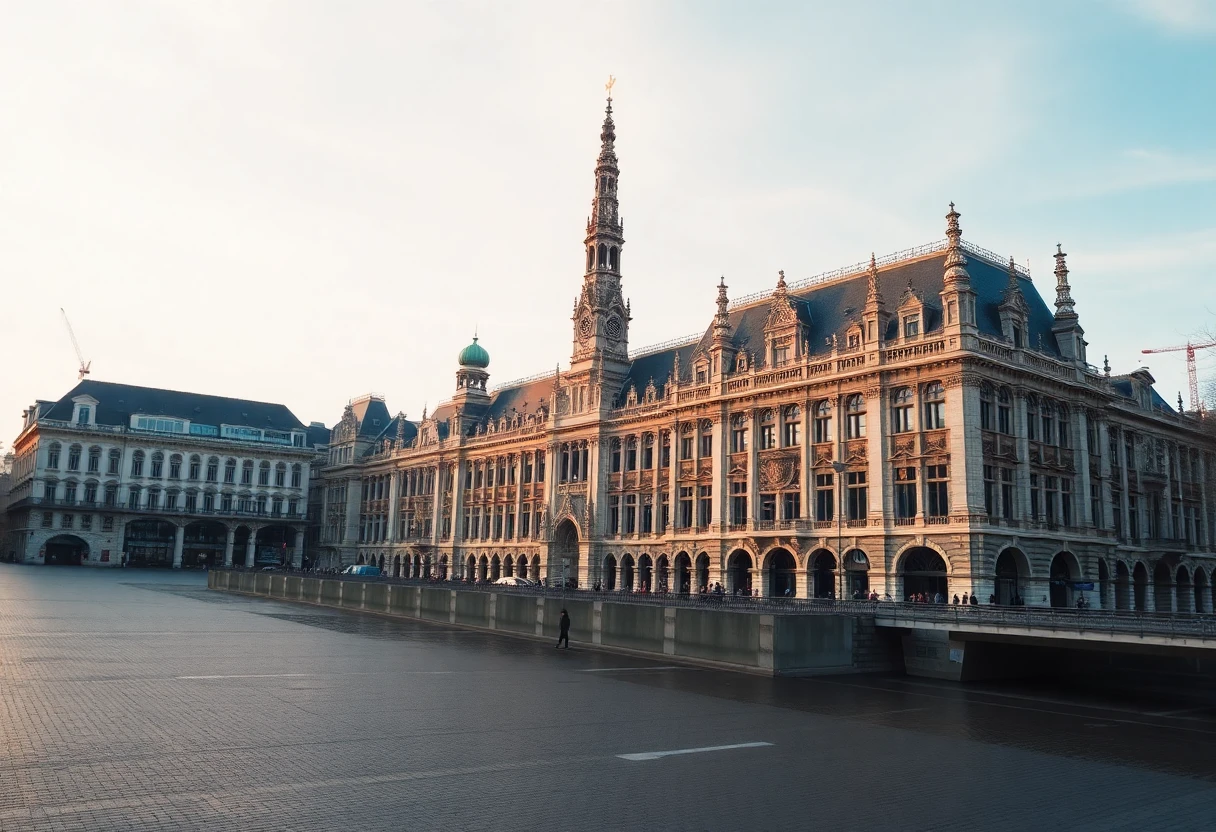
Double holiday pay is statutory for every private-sector employee in Belgium — a supplement equal to 92 percent of your gross monthly salary that you are legally owed every single year. Yet thousands of workers never check whether it was calculated correctly, never claim their eco-cheques on time, and have no idea that their trade union membership quietly entitles them to a syndicale premie of up to €145. That is real money disappearing into thin air — and your employer has no legal obligation to remind you.
The Hidden Package Your Employer Never Walks You Through
Most Belgian workers think of their salary as a single number on a payslip. The gross amount, the deductions, the net that lands in your account. That's it, right? Wrong. A typical Belgian compensation package includes meal vouchers, a company car for roughly 20 percent of employees, group insurance, hospital insurance, eco-cheques, a 13th month, and double holiday pay — adding 20 to 40 percent to base salary value for workers who actually claim everything they are owed.
Here is what most people never find out: many of these benefits are only paid out if you actively request them, submit the right form to the right institution by a specific deadline, or explicitly flag them to your employer. Eco-cheques lapse after 24 months if you never use them. The syndicale premie has a submission window that closes — and many workers simply miss it. These are not theoretical entitlements. They are cash that exists in your sector's social fund right now, waiting for you to claim it.
More than 2 million workers in Belgium benefit from meal vouchers and eco-cheques every month, making them a central part of the Belgian salary package — and these benefits are completely exempt from social security contributions and income tax, for both employer and employee, provided strict legal conditions are met. If your employer is not granting them, or is granting them incorrectly, that is money you are losing to a technicality — and you have every right to challenge it.
What the Law Actually Says
Belgium's system of fringe benefits is not a perk that employers hand out voluntarily. It is a framework of Collective Labour Agreements (CAOs/CCTs), set at sectoral level within your Paritaire Comité (Joint Committee), and backed by enforceable law. The granting of eco-cheques must be provided for by a sectoral or company-level CBA, which must specify the value and frequency of the award. Eco-cheques have a validity period of 24 months, beginning from the date they are made available to the worker — and the responsibility to use them within the legal deadline falls on you.
Double holiday pay for white-collar workers is governed by the Annual Holidays Act. For white-collar employees, holiday pay is paid directly by the employer and includes two components: single holiday pay (continued monthly salary during leave) and double holiday pay — a supplement equal to roughly 92 percent of one month's gross salary, paid annually in May or June. For blue-collar workers, the system is different: for most blue-collar workers, holiday pay is administered via a centralised holiday fund, specifically the Office National des Vacances Annuelles (ONVA/RJV), meaning your employer may not even hold those funds — the fund does.
The syndicale premie works differently: a portion of the union membership fee you pay is reimbursed to you under certain conditions — whether you receive it and how much depends on the sector you work in and is determined by collective agreement. The money for the syndicale premie comes from employers, who pay it via a social fund or a fonds voor bestaanszekerheid (fund for subsistence security) to the unions. Employers fund it. You just have to collect it.
The Real Numbers for 2026
Every figure below has been verified from official and sector-authoritative sources for 2026. Do not let your employer tell you otherwise.
| Category | 2026 Figure | Source |
|---|---|---|
| National minimum wage (RMMMG/GAMMI) | €2,189.81/month (from 1 April 2026) | WageIndicator / SPF Emploi |
| Employee social security contribution | 13.07 percent of gross salary | OECD Taxing Wages 2026 / ONSS |
| Employer social security (white-collar) | ~27 percent of gross salary | ONSS / Playroll 2026 |
| Income tax — bracket 1 | 25 percent up to €16,320 | fin.belgium.be (FPS Finance) |
| Income tax — bracket 2 | 40 percent from €16,320 to €28,800 | fin.belgium.be (FPS Finance) |
| Income tax — bracket 3 | 45 percent from €28,800 to €49,840 | fin.belgium.be (FPS Finance) |
| Income tax — bracket 4 | 50 percent above €49,840 | fin.belgium.be (FPS Finance) |
| Tax-free personal allowance | €10,910 (assessment year 2026) | fin.belgium.be (FPS Finance) |
| Double holiday pay | ~92 percent of gross monthly salary | Boundless / emploi.belgique.be |
| Eco-cheques (maximum, tax-free) | €250/year | emploi.belgique.be (CCT 98 series) |
| Meal vouchers — maximum value | €10/day (employer max: €8.91) | Playroll / emploi.belgique.be |
| Syndicale premie (sector-dependent) | Up to €145/year | ACV/CSC, sectoral funds |
The personal tax-free allowance is €10,910 for income tax year 2025 (assessment year 2026), and it may be higher depending on your personal situation — for example, if you have dependent children. That is a meaningful reduction in your taxable base, and many workers on modest incomes end up paying far less tax than they assume.
Think about what these numbers mean in practice for a typical Belgian worker earning around €3,000 gross per month. Your double holiday pay alone is worth approximately €2,760 gross in one payment. Add eco-cheques of €250. Add meal vouchers at €10 per working day across ~220 days — that is €2,200 in additional purchasing power, fully exempt from tax and social security. Unlike a standard pay rise, these advantages benefit from a particularly favourable tax and social treatment — exempt from social security contributions (ONSS) and from income tax, for both employer and employee, provided certain strict conditions are respected.
What Your Employer Will Never Tell You
This is where workers get caught out. Your employer is legally required to pay your double holiday pay and, if your sector's CBA provides for it, your eco-cheques and year-end premium. But they are not required to explain your rights in plain language, alert you to upcoming claim deadlines, or tell you that you can challenge a calculation.
Here are three specific things you should do right now. First, check your Joint Committee number (Paritaire Comité). Your Joint Committee number is a foundational payroll parameter because it determines your sectoral minimum wages, indexation timing and mechanism, entitlement to and amount of year-end premium, shift and night-work premiums, meal voucher levels, eco-cheque amounts, and supplementary holiday entitlements beyond the statutory 20 days. You can find your sector's number on your employment contract or payslip. The SPF Emploi maintains a full searchable database at emploi.belgique.be.
Second, check whether your eco-cheques are still valid. Eco-cheques have a validity period limited to 24 months, beginning from the date they are made available to you — using them within that deadline is your own responsibility. However, within three months of expiry, you may submit a single reactivation request to the issuer, free of charge. Miss that window and the money is gone permanently.
Third, if you are a union member, claim your syndicale premie. In many sectors you get a large part of your membership fee back in the form of a union or syndicale premie, which can amount to up to €145 per year. Net of this, you pay significantly less for your membership. Your employer must provide you with a certificate card (vakbondspremiekaart) — usually by November at the latest. You then submit it to your union before the sector deadline. Many workers simply never submit the form.
The EU Pay Transparency Directive must be transposed into Belgian law by 7 June 2026. From that date, all Belgian employers must publish salary ranges in job postings, cannot ask about your previous remuneration, and must remove pay-confidentiality clauses. This is a powerful new tool. Use it when you negotiate your next contract.
Belgium vs The Rest of Europe
Among the highest-wage countries in Europe as of January 2026, France's minimum wage stood at €1,823/month, Belgium at €2,112/month, the Netherlands at €2,295/month, Germany at €2,343/month, Ireland at €2,391/month, and Luxembourg at €2,704/month, according to Eurostat. Belgium sits solidly in that top tier. But the comparison is more nuanced than a raw number.
Germany's federal minimum wage, set by law (Mindestlohngesetz), has been €13.90 gross per hour since 1 January 2026, confirmed directly by the official BMAS (Federal Ministry of Labour and Social Affairs) website. In the Netherlands, the gross statutory minimum wage for employees aged 21 and over rose to €14.71 per hour from 1 January 2026, an increase of 2.15 percent compared to the previous rate. What Belgium offers that Germany and the Netherlands do not is a uniquely rich system of fringe benefits — eco-cheques, the syndicale premie, and a legally guaranteed double holiday pay — that add thousands of euros per year to your effective package, often fully exempt from tax. Belgium's wage system is shaped by automatic indexation, one of the highest employer social security burdens in Europe, mandatory 13th-month and double holiday pay, and extensive sectoral regulation through Joint Committees. The protection is real. But only if you claim it.
Use the EuroDuty salary comparator to see side-by-side how your net take-home in Belgium stacks up against what the same gross salary would leave you in Germany, France, or the Netherlands.
How to Claim What You Are Owed
-
Find your Joint Committee number. Check your employment contract, payslip, or search the official SPF Emploi database at emploi.belgique.be/fr/themes/relations-collectives/commissions-paritaires. Your sector number unlocks every other entitlement below.
-
Verify your double holiday pay. White-collar workers should receive approximately 92 percent of their gross monthly salary, paid in May or June. If you did not receive it, or if the amount looks wrong, contact your employer's HR or social secretariat in writing. Blue-collar workers should check directly with the ONVA/RJV (Office National des Vacances Annuelles) at onva.be — that office holds your holiday fund directly.
-
Claim your eco-cheques before they expire. Log into your Edenred, Monizze, or Pluxee account and check the balance and validity date. Employers can grant up to €250 per employee per year, tax-free and exempt from social security contributions. Eco-cheques must be named, carry a 24-month validity, cannot be converted to cash, and require a CBA or individual agreement.
-
Submit your syndicale premie form. Ask your employer for the vakbondspremiekaart — they are legally required to provide it. Submit it to your union (ACV/CSC, ABVV/FGTB, or ACLVB/CGSLB) before your sector's annual deadline. The union premium in public services is paid out annually — if you were a staff member in 2025, you should receive your application form from your employer before 31 March 2026, and must return it before 1 July 2026.
-
Calculate your exact net salary. Use the EuroDuty salary calculator to model your gross-to-net income with all deductions — including social security at 13.07 percent and your progressive income tax bracket — and verify that what lands in your account matches what it should.
-
Report underpayment. If your employer is not paying your sector minimum, withholding your double holiday pay, or failing to provide eco-cheques your CBA entitles you to, file a complaint with the Inspection du Travail (SPF Emploi) at emploi.belgique.be or contact your union's legal advice service — free for members.
Calculate your exact net salary and compare your rights across all 27 EU countries at EuroDuty — completely free.
Frequently Asked Questions
Stay Updated
Monthly EU salary and labor law updates
Free · No spam · Unsubscribe anytime